How It Works
Here we're going to learn about the new ideas in biology that will help us to get sick less often and to live longer.
Nutrition may seem mundane, but its apparent simplicity is deceptive. The most interesting discoveries of recent years relate to it, or rather, to our diets, in one way or another. Let's start by looking at how different animals eat.

Here's a shrew. One of the smallest creatures among our distant relatives. It eats all the time, stopping only to sleep. If a shrew doesn't eat for 6 hours, it dies. Its natural number of meals is 70 a day.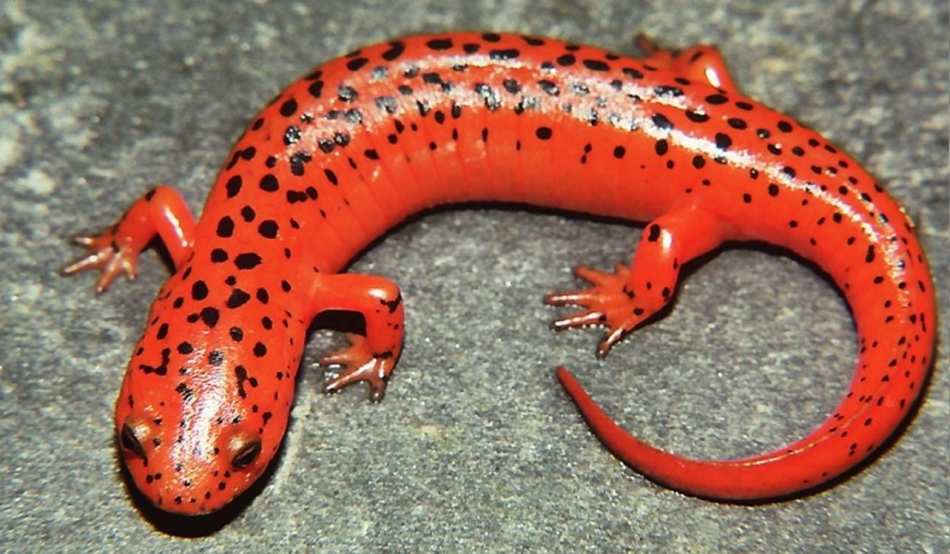
Here's a salamander, an amphibian. Some species can go without food for several years. During that time they shrink to half their size, but after recovering, they can repeat the feat.
Salamanders are known for their ability to regenerate their lost body parts. Might these two abilities be related? Crocodiles and snakes (reptiles, terrestrial vertebrates, "creepers") can survive while eating only once a year. Sometimes "snake charmers" simply sew their snakes' mouths shut.
Humans are neither shrews nor salamanders. The longest medically confirmed nutritional break lasted 250 days. Of course, the person did not die but lost more than 100 kg of fat. So, eating every day, strictly speaking, isn't necessary and taking food pauses is not fatal. On the contrary, it's good for your health, as experience shows. For a long time it was believed that the best diet is to eat regularly, that is, daily (and several times a day). However, in the 1930s an interesting fact was discovered that can be equally applied to people: if you feed mice on a daily basis, they live 3 years, and if you feed them every other week, they live much longer. That is rather strange. According to modern ideas, the average life expectancy is genetically determined for every species. A mouse lives 3 years, a cat lives 20 years, an elephant lives 80. If the diet increases the life span by 1/3, this is equivalent to a change on the genetic level, and that's epigenetics.
The intermittent dietary pattern was called "cyclical fasting". Studies at the cellular level have shown that in such tissues as the heart and the liver, during cyclical fasting, the number of working cells grows by 30-40%. In this way, the body's functional capacity increases. At the same time, no pathological changes were observed in the tissues (V.G. Zimmerman). It was also found that mice with artificially induced blood cancer (leukemia), when fed cyclically, live twice as long (Y.V. Zinovyev). The study of other animals, including monkeys, confirmed the assumption that eating whenever and whatever you want is far from the best way to maintain health and longevity.
What have we lost? The importance of food pauses. They were always present in nature as an external factor of evolution, but we don't have them now. We can assume that introduction of food pauses into our diet will activate the same biological mechanisms that allow mice to live longer and get sick less. In practice, we have confirmed that cyclical fasting has a powerful therapeutic effect. It allows you to get rid of many "chronically incurable diseases", so longevity is available not only to mice.
How does fasting work?
Usually, the health effects of fasting are often explained in confusing or obscure terms: eliminating toxins, reducing the burden on the digestive system and giving it a rest, and losing excess weight, etc. That's unconvincing and unconstructive. Here are some ideas related to fasting that have appeared in biological science in recent years.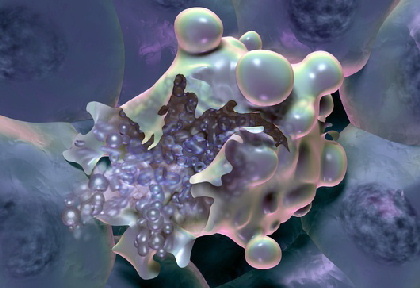
Apoptosis. This term was proposed to describe an unusual phenomenon. Any multicellular organism constantly gets rid of some cells (old, sick, damaged), increasing its vitality as a whole. It simply breaks them down, and the mechanism is launched by the cells themselves. The intensification of apoptosis during fasting explains why the functions of many organs improve, the viral pressure decreases, immunity becomes stronger, and so on. The number of cells in any body is a constant. If some old and sick cells are consumed, then new, young and healthy ones are ready to take their place after fasting. The "asymmetrical aging" phenomenon is no less interesting.
In the process of cell division, the intracellular debris of the parent cell is concentrated only in one half of it, which is why one of the daughter cells becomes cleaner and younger, while the other one is "dirtier" and shows a higher tendency to apoptosis.
Stem cells. As we age, our cells undergo apoptosis, and stem cells replace them. To work effectively, stem cells need "living space" and competition. During fasting, there's both. Competition for resources causes some stem cells to die off, which increases the cell renewal efficiency.
Under a dietary pattern with pauses, the heart, liver and kidneys work noticeably better. The percentage of working cells in these organs increases.
Our patients often notice that their herpes and warts disappear, and in those with viral hepatitis, the antibody titer (antiviral system) is reduced. Allergic diseases, eczema, neurodermatitis vanish fast, meaning that a reconfiguration of the immune system occurs due to stem-cell renewal.
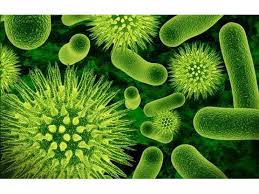
Microbiome. This is a community of bacteria, viruses, fungi, and other microorganisms that live in our body. The number of microorganisms in the microbiome is ten times greater than the number of human cells that make up the human body itself. Colonization of this new environment begins before birth and in many respects determines the host's later development. Numerous studies have revealed an apparent correlation between microbiome disorders and a higher risk of developing a variety of anomalies, ranging from cancer and autism to cardiac diseases and obesity. Since such coexistence of different species "under one roof" has lasted for hundreds of millions of years, it should be considered successful. In practice, we are completely unaware of the role of symbionts in the decisions we make. Perhaps our choice of food, its cooking methods and quantity, and also the dietary pattern are far from being our own choice?
The number and composition of the microbiome vary significantly under various diets and fasting, which should be remembered by the authors of wellness programs. Chinese scientists have found that with age the composition of our intestinal microflora changes, and periodic fasting leads to its "rejuvenation". The human microbiome project is funded by the U.S. government and involves the study of 900 species of microorganisms living alongside us. Today only 170 of them are known.
Genome and longevity. Interestingly, the genomes of long-lived and ordinary people differ in only three sections of the chain, and all three are directly related to nutrition. They are one gene that regulates blood sugar and two genes that control cholesterol metabolism. It is those genes that are activated during fasting.
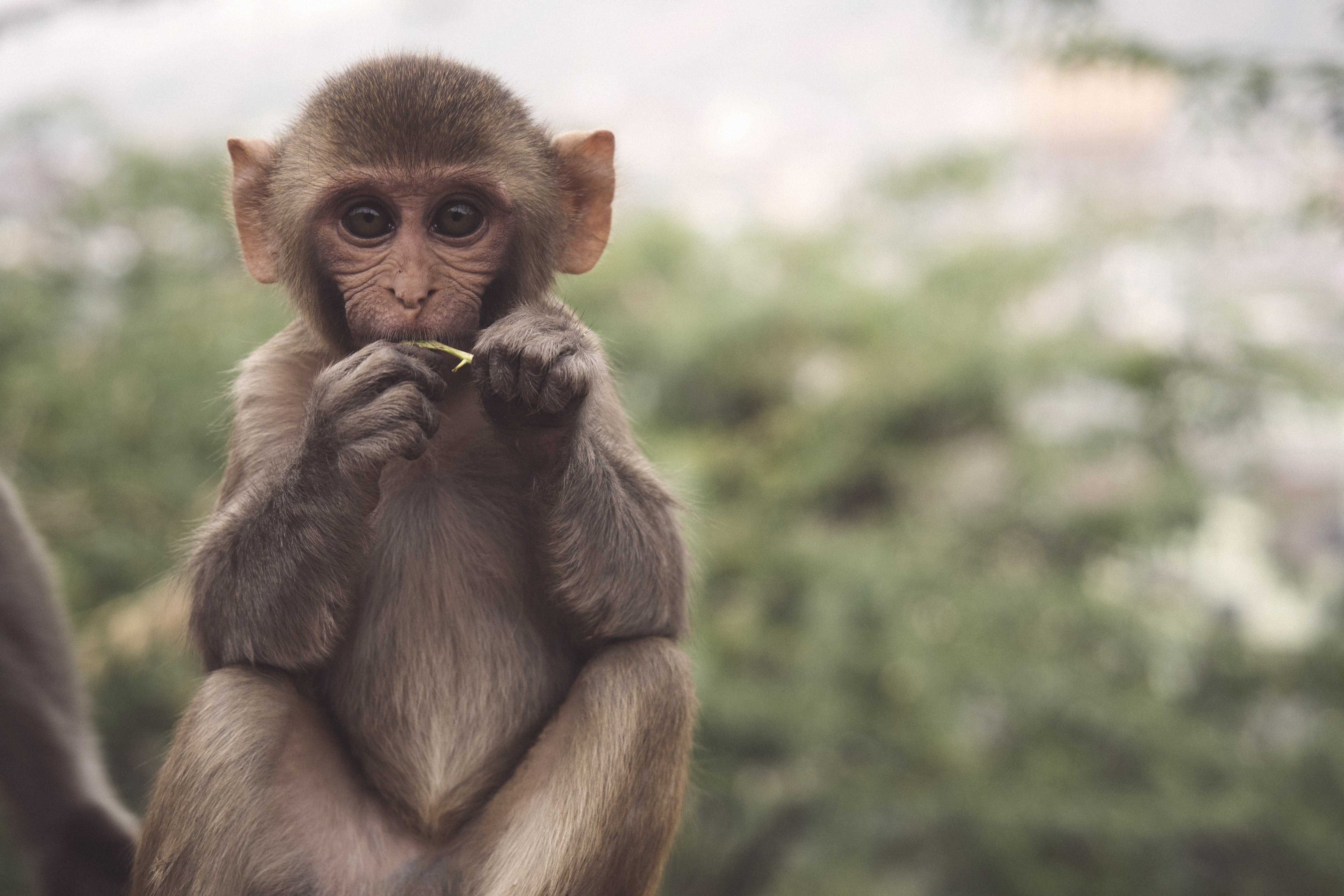
A study conducted on monkeys has shown that such "longevity genes" are successfully activated in monkeys with high social status, but stay idle in those in the lower ranks of the hierarchy.
Perhaps voluntary fasting is also a way to be "above the social system"?
It has long been noted that in developed democracies life expectancy is always higher.
Sirtuins (anti-aging pills). A relatively recent discovery has caused a real stir. Studying periodically fasting animals, scientists found that an increase in life expectancy is associated with a protein called sirtuin. This protein was intensively synthesized by the SIRT1 gene during fasting, but its production fell again after. The discovery caused great interest in the scientific community and the media. Some called sirtuin the key to longevity. As a result, the production of various rejuvenating creams, medicines and other commercial products containing sirtuin began. Resveratrol (most commonly associated with polyphenols of red grapes) is one of the plant sirtuins.
However, more careful studies have not confirmed the role of SIRT1 in increasing lifespan. New experiments have confirmed the fact that caloric restriction increases life expectancy, while activating the synthesis of sirtuins. But dietary restriction cannot be replaced with a protein; it is only a byproduct of fasting.
Epigenetics. In each DNA chain, consisting of a multitude of genes (we have about 30,000 of them), changes take place throughout our lives. Some genes "slow down" their activity at the right time, others become active in their place. It determines both our biological age and the dominant processes in our bodies. What controls that? It's unknown yet. Epigenetics studies this process.
Each animal has its own "biological clock", which strictly regulates the rhythm of life and its duration. As a rule, the clock doesn't stop suddenly in a healthy organism. That is preceded by a period of "age-related changes and illnesses," and they are the executive mechanism that cuts life short.

That isn't always the case though. Here's an example: a queen bee differs from its "subjects", it's twice their size and lives 40 times longer than an ordinary bee. This being said, worker bees and the queen have no genetic differences. There's only one dissimilarity: several genes work differently in their cells. It's caused by the single fact that the queen feeds on royal jelly. So, can the biological clock sometimes run more slowly?
In humans, just like in bees, a change in the activity of certain genes leads to illness and death "at the right time". For example, a person may live half their life without knowing that they're prone to hypertension, diabetes, or cancer. When the moment comes, the mechanism snaps into action, and we're "faced with the fact".
That "timely diseases" are preprogrammed is beyond question, and this gives us hope to find epigenetic treatment for them and to learn how to slow down aging.
Of course, it's beneficial to the survival of any species when the population consists mainly of young individuals. Still, we're interested in the state of our personal biological clock and in what can be reconfigured in order to get sick less and live longer, right?
Evolution has solved the problem of unnecessary longevity by leaving "bookmarks" in the genome in the form of genes of predisposition to some diseases. It makes immortality impossible and longevity problematic. Such "bookmarks" include osteoporosis, atherosclerosis, hypertension, diabetes, cancer, weakening of the immune system... In general, there are a dozen ticking bombs planted in our genes.
It's lucky that we know a great clocksmith called cyclical fasting.
Conclusions. In order to change the natural course of genetic events in the body (the onset of timely diseases and death), it's necessary to periodically create a "state of emergency" so that the long-term programs are delayed for a while, and "not dying today" becomes the first priority. A food pause is such a state of emergency. During a pause, the body is forced at the programmatic (genetic) level to seek the optimal solution, which brings back natural health and portends longevity.
All this allows us to take a new look at what happens during fasting and how to change its technique accordingly.





Start a new life with our cyclical fasting program.
Register, fill out a short form and we will help you choose the program that is right for you.
Register